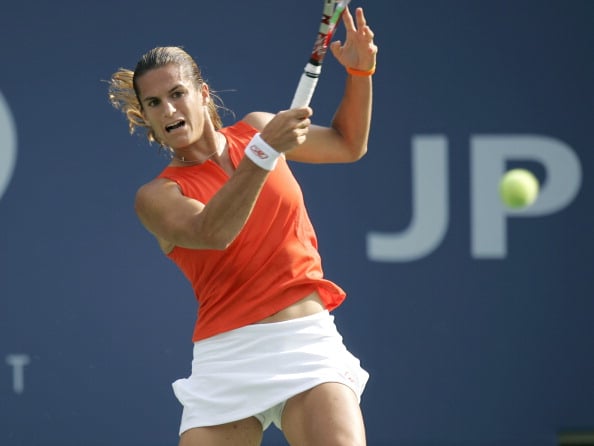
From French Prodigy to Global Icon: Deconstructing Amelie Mauresmo's $8 Million Net Worth
Amelie Mauresmo stands as one of the most revered figures in French tennis history, a trailblazer whose powerful game and unwavering spirit captured the hearts of fans worldwide. Beyond her impressive on-court achievements, which include Grand Slam titles and the coveted World No.1 ranking, Mauresmo has also built a significant financial legacy. Currently, her Amelie Mauresmo's $8 Million Net Worth Revealed stands at an estimated $8 million, a testament to her athletic prowess, strategic career choices, and savvy post-retirement endeavors. But how exactly did this French champion translate her remarkable tennis career into a robust personal fortune?
This article delves deep into the journey of Amelie Mauresmo, exploring the key milestones that contributed to her impressive wealth, from her early days as a junior champion to her impactful roles beyond the baseline. We'll uncover the distinction between her substantial career prize money and her current net worth, offering insights into the financial landscape of elite sports.
The Formative Years: A Blueprint for Success Forged in France
Amelie Mauresmo's tennis journey began in Saint-Germain-en-Laye, France, at the tender age of four. This early start quickly set the stage for what would become an extraordinary career. Her prodigious talent wasn't long in manifesting on the international junior circuit. By 1996, Mauresmo had already etched her name in the annals of junior tennis, securing both the Junior French Open and Wimbledon singles titles. This dual triumph earned her the prestigious title of Junior World Champion, signaling her arrival as a force to be reckoned with.
The transition to professional tennis can be fraught with challenges, but Mauresmo met it with characteristic determination. Her breakout moment on the senior tour came dramatically at the 1999 Australian Open. Unseeded, she defied expectations, battling her way through the draw to reach the final, becoming only the third French woman in history to achieve this feat. While she ultimately fell short of the title, her electrifying performance, which included a memorable victory over Lindsay Davenport in the semifinals, thrust her into the global spotlight. It was after this pivotal match that Mauresmo, with immense courage and grace, came out as a lesbian to the international press. This groundbreaking revelation not only marked a personal milestone but also made her a significant figure in the LGBTQ+ community within professional sports, adding another layer to her public persona and influence.
These early successes were more than just victories; they were critical building blocks. They established her brand, attracted initial endorsements, and laid the foundation for the significant prize money and opportunities that would eventually contribute to her substantial Amelie Mauresmo net worth.
Scaling the Ranks: Grand Slam Glory and the World No.1 Summit
The early promise of Amelie Mauresmo's career blossomed into consistent excellence. She became a stalwart representative for France on the biggest stages, proudly wearing her national colors at the Olympic Games in 2000 and 2004, where she notably earned a silver medal at the Athens Games. Her commitment to team competition was also evident in her regular participation in the Fed Cup, where she consistently performed at an elite level.
However, it was in 2004 that Mauresmo reached the zenith of her individual career. In September of that year, she achieved the pinnacle of the sport, ascending to the world No.1 ranking. This historic accomplishment made her the very first French player, male or female, to hold the top spot in professional tennis. The No.1 ranking is not merely a number; it's a powerful indicator of dominance that significantly amplifies a player's marketability and earning potential through endorsements and increased appearance fees, directly impacting their long-term financial security and Amelie Mauresmo net worth.
Her legacy was further cemented by her triumphs at the Grand Slams. After several near misses and heartbreaking defeats – including a tough loss to Serena Williams in the 2004 Wimbledon semifinals – Mauresmo broke through, capturing two coveted Grand Slam singles titles: the Australian Open and Wimbledon. These victories were not just career-defining moments; they were monumental achievements that dramatically increased her profile and commercial appeal. By the time she retired in 2009, Amelie Mauresmo had amassed an impressive haul of 25 singles titles and 3 doubles titles, securing her place among the sport's elite.
Understanding Career Prize Money vs. Net Worth: A Critical Distinction
One of the most intriguing aspects of professional athlete finances is the distinction between gross career earnings and net worth. Amelie Mauresmo's tennis career saw her earn just shy of an astonishing $15 million in career prize money. On the surface, this figure might suggest a significantly higher net worth than the estimated $8 million. This discrepancy is a common reality for many high-earning athletes and offers valuable insights into wealth management.
The difference highlights several crucial factors: taxes, agent fees, coaching expenses, travel costs, and general living expenses. For an elite athlete like Mauresmo, a substantial portion of her prize money would have been allocated to these operational costs. Depending on where tournaments are played, taxes can range significantly, and a top-tier agent typically commands 10-20% of prize money and endorsement deals. Furthermore, maintaining a professional team – including coaches, trainers, physiotherapists, and hitting partners – is essential for peak performance but comes at a significant cost. After accounting for these deductions, the net amount available for investment and personal use is considerably less than the gross prize money. For a more detailed breakdown, you might find our analysis on Amelie Mauresmo: $15M Career Earnings vs $8M Net Worth particularly insightful.
Beyond the Court: Mauresmo's Post-Retirement Ventures and Wealth Growth
Amelie Mauresmo announced her retirement from professional tennis in December 2009, signaling the end of an illustrious playing career. However, for a personality of her caliber, retirement from playing rarely means retirement from working. Mauresmo seamlessly transitioned into a new chapter, leveraging her profound understanding of the game and her elite experience into coaching and advisory roles, which have continued to bolster her Amelie Mauresmo net worth.
Her most high-profile coaching role was with former World No.1 Andy Murray. This partnership was groundbreaking, as Mauresmo became one of the very few women to coach a top male player at that level. While her tenure with Murray faced intense media scrutiny and challenges, including her maternity leave, her very presence in such a demanding role demonstrated her enduring value and expertise in the tennis world. Coaching at this level commands significant remuneration, contributing to her ongoing income streams. Beyond Murray, she has also served as captain of the French Fed Cup team and coached other top players, cementing her status as a respected mentor.
Successful athletes often diversify their income sources post-retirement. While specific details of Mauresmo's investments or business ventures are not publicly detailed, it's reasonable to assume that a portion of her wealth would be strategically managed through various investments, real estate, or potential media engagements. Her continued relevance in tennis circles, both as a commentator and an administrator, provides a platform for sustained visibility and potential earning opportunities beyond traditional coaching.
The Components of an $8 Million Fortune: A Deeper Dive into Amelie Mauresmo's Net Worth
To accumulate an estimated $8 million net worth, especially after earning substantial but not entirely retained prize money, requires a multifaceted approach to wealth building. Here’s a breakdown of the likely components contributing to Amelie Mauresmo’s fortune:
- Career Prize Money: The foundation of her wealth, approximately $15 million before deductions, provided significant capital for future investments and living expenses.
- Endorsements: As a Grand Slam champion and World No.1, Mauresmo undoubtedly secured lucrative endorsement deals with sports brands, equipment manufacturers, and other corporate partners during her playing days. These deals often provide a fixed annual income in addition to performance-based bonuses, a crucial element in boosting net worth beyond prize money.
- Coaching Income: Her high-profile coaching stints, particularly with Andy Murray and the French national team, represent substantial post-retirement income streams. Elite coaches command top fees for their invaluable expertise.
- Investments: It is highly probable that a portion of her earnings has been strategically invested in stocks, bonds, mutual funds, or other financial instruments, allowing her capital to grow over time. Savvy investment choices are a cornerstone of long-term wealth accumulation for athletes.
- Real Estate: Many athletes invest in real estate, both for personal use and as income-generating assets. Ownership of property could contribute significantly to her overall net worth.
- Media & Advisory Roles: Her expertise makes her a valuable asset for television commentary, tennis analysis, or advisory positions within sports organizations, providing additional revenue streams.
For aspiring athletes, Mauresmo's journey offers a valuable lesson: success on the court is just the beginning. Strategic financial planning, diversification of income sources, and a thoughtful transition into post-playing careers are vital for building and maintaining a substantial net worth.
Conclusion
Amelie Mauresmo's journey from a four-year-old prodigy in Saint-Germain-en-Laye to a Grand Slam champion and World No.1 is nothing short of inspirational. Her $8 million net worth is a direct reflection of her phenomenal talent, unwavering dedication, and the smart financial decisions she made throughout her career and into retirement. From junior titles to Olympic medals and iconic Grand Slam victories, Mauresmo consistently demonstrated the qualities of a true champion. Her ability to transition effectively into high-profile coaching roles after retiring from playing further underscores her enduring impact and business acumen. Amelie Mauresmo's legacy is not just defined by the trophies she lifted, but also by the significant financial independence she built, proving that with passion, perseverance, and prudent management, a career in elite sports can indeed lead to lasting fortune.
